Is My Baby Pooping Too Much? What's Normal by Age
Many parents worry that their baby is pooping too often, especially in the early weeks when diapers seem to fill quickly. Frequent bowel movements can feel alarming, but in many cases, they are completely normal and part of healthy digestion.
This article focuses on how often babies poop, what typical ranges look like by age, how feeding type affects frequency, and when frequent stools may be worth a closer look.

Photo by Marina Zvada from Pexels
Why Poop Frequency Varies So Much in Babies
Baby digestion is still developing, especially in the first months of life. Several factors influence how often a baby poops, including how frequently they eat, how quickly milk moves through their digestive system, and individual variation.
Because babies eat often and have small stomachs, it is normal for bowel movements to happen more frequently than in older children or adults. Pediatric guidance consistently emphasizes that wide variation is normal, particularly in the newborn period.
What's Normal: Baby Poop Frequency by Age
There is no single "correct" number of bowel movements per day. Instead, healthcare guidance looks at ranges and patterns.
Newborns (0 to 4 weeks)
In the first weeks of life, many babies poop very frequently. Some newborns may have a bowel movement after nearly every feeding, while breastfed babies in particular can pass frequent, soft stools early on (Source: American Academy of Pediatrics).
According to Healthline, breastfed newborns may have several bowel movements per day, sometimes more than five, while formula-fed babies may poop less often.
Frequent stools at this age are usually normal if the baby is feeding well and gaining weight.
1 to 2 Months
As digestion matures, some babies continue to poop often, while others begin to space out bowel movements. Both patterns can be normal.
HealthyChildren.org notes that it is normal for babies to poop anywhere from several times a day to once every few days, depending on the baby.
3 to 6 Months (Before Solids)
By this stage, many babies have more predictable bowel habits, but frequency still varies widely. Some babies poop daily, while others may go several days without a bowel movement.
What matters most is that stools remain soft and the baby appears comfortable.
Breastfed vs Formula-Fed Babies: Frequency Differences
Feeding type plays a significant role in how often babies poop.
Breastfed babies often poop more frequently, especially in the early weeks, because breast milk is easily digested and moves quickly through the gut. Formula-fed babies tend to poop less often, as formula takes longer to digest.
These differences are explained in more detail in Breastfed vs Formula-Fed Babies: How Diaper Patterns Differ. Regardless of the feeding method, both patterns can be healthy.
When Frequent Pooping Is Still Normal
Frequent pooping is usually normal when:
- Stools are soft
- The baby is feeding well
- Wet diaper output is normal
- The baby is alert and growing
Many babies poop multiple times a day without any underlying issue. Pediatric guidance emphasizes that frequency alone is rarely a problem if other signs of health are present.
If you are unsure what typical diaper output looks like overall, How Many Wet and Dirty Diapers Should a Newborn Have? provides age-based benchmarks.
Frequent Pooping vs Diarrhea
Diarrhea in babies is generally defined as a sudden increase in the number or looseness of stools, with the stools becoming very loose or watery compared with the baby's usual pattern. Parents may consider diarrhea when stools are much looser than normal and occur more frequently than expected, especially if the baby also has signs such as poor feeding or fever.
If stool frequency is high but consistent and the baby otherwise seems well, it is less likely to be diarrhea.
When Frequent Pooping May Need Attention
According to the NHS, you should consider contacting a healthcare provider if frequent stools are accompanied by:
- Signs of dehydration, such as fewer wet diapers
- Poor feeding or refusal to feed
- Lethargy or unusual fussiness
- A sudden and persistent change from your baby's normal pattern
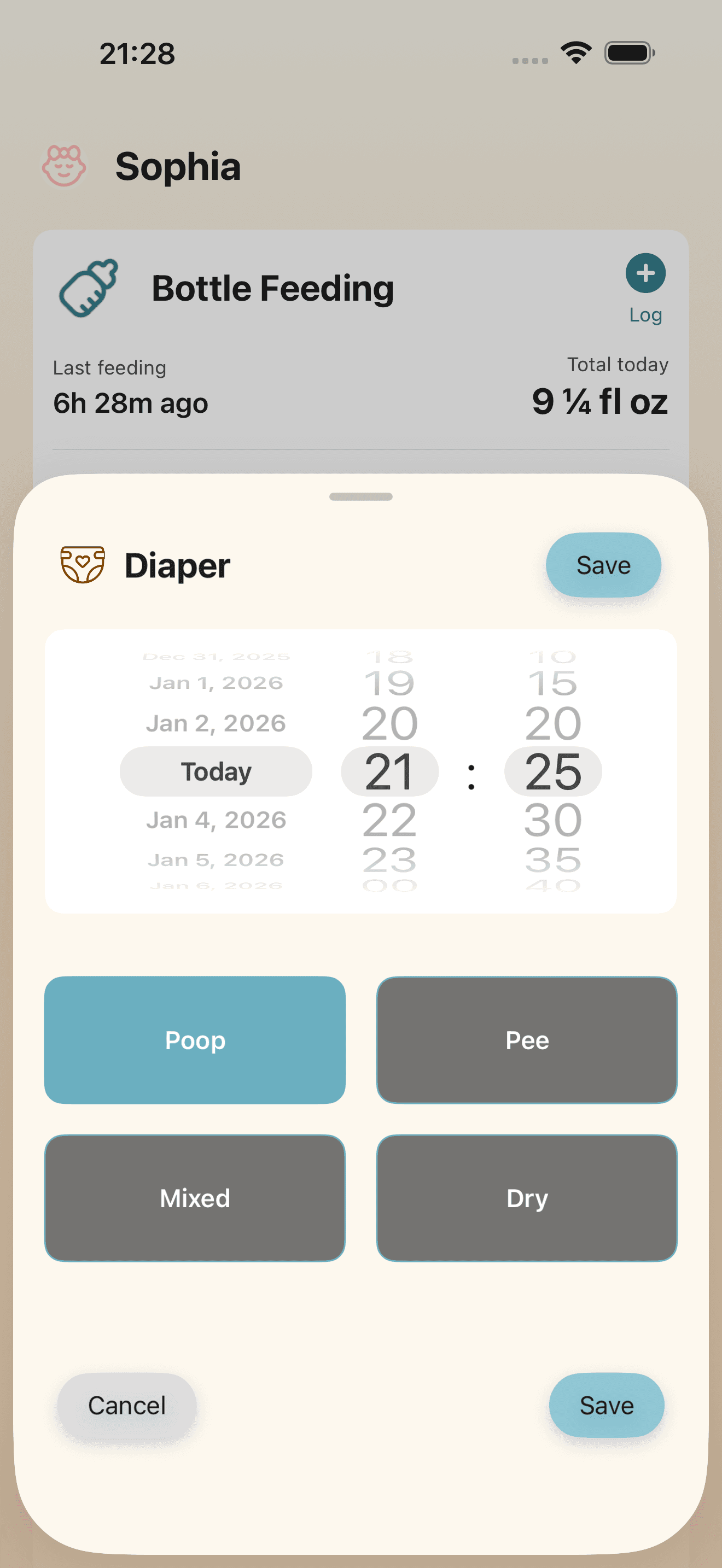
Tracking both wet and dirty diapers can help clarify whether frequent pooping is part of a normal pattern or something new. Guidance on pattern tracking is outlined in How to Track Newborn Diaper Changes and What They Reveal About Health.
How This Relates to Stool Color
This article focuses on how often babies poop, not what the stool looks like. If you are concerned about changes in stool color, including green, red, or pale stools, those topics are covered in Baby Poop Colors Explained: What's Normal and When to Worry.
Takeaway
Frequent pooping is very common in babies, especially in the newborn period and among breastfed infants. In most cases, pooping often is a sign of healthy digestion rather than a problem.
Paying attention to overall patterns, feeding behavior, wet diaper output, and how your baby seems to feel can help determine whether frequent stools are normal or worth discussing with a healthcare provider.
The information in this article is based on established pediatric guidance and reputable health sources and is provided for general education. It should not replace advice from a qualified healthcare professional.
Frequently Asked Questions About Baby Poop Frequency
Is it normal for my newborn to poop after every feed?
Is it normal for my newborn to poop after every feed?
Yes. Many newborns, especially breastfed babies, poop after most feeds, and this is often normal.
How many times a day is too much for baby poop?
How many times a day is too much for baby poop?
There is no specific number that is considered too much. Frequency varies widely, and soft stools with normal feeding and growth are usually reassuring.
Do breastfed babies poop more often than formula-fed babies?
Do breastfed babies poop more often than formula-fed babies?
Yes. Breastfed babies often poop more frequently, especially in the early weeks.
Is frequent poop a sign of diarrhea?
Is frequent poop a sign of diarrhea?
Not always. Diarrhea is usually marked by a sudden change and other symptoms, not just frequent stools.
When should I call a healthcare provider?
When should I call a healthcare provider?
If frequent stools are paired with dehydration signs, poor feeding, or a sudden change in pattern, it is a good idea to seek guidance.
Related Articles
Baby Poop Colors Explained: What's Normal and When to Worry
Learn what different baby poop colors mean and which ones are normal.
Breastfed vs Formula-Fed Babies: How Diaper Patterns Differ
Understand how feeding method affects diaper output patterns.
How Many Wet and Dirty Diapers Should a Newborn Have?
Get age-based benchmarks for normal diaper output.
How to Track Newborn Diaper Changes and What They Reveal About Health
Learn how to monitor and record your baby's diaper patterns.
How Weather and Hydration Affect Baby Diaper Output
Learn how environmental conditions influence diaper patterns and hydration.
Track Your Baby's Health with Noora Baby
Noora Baby makes it easy to track your baby's wet diapers, dirty diapers, feeding, and sleep patterns. Get insights into what's normal and when to seek help.