Feeding Tracking: Understanding Your Baby's Feeding Patterns
Feeding a baby in the early weeks and months often comes with many questions. How often should your baby eat? Are they getting enough? Is what you're experiencing normal?
Feeding tracking is one way many parents choose to better understand their baby's feeding patterns and feel more confident during this time. Whether you are breastfeeding, bottle feeding, or using a combination of both, tracking can offer clarity, reassurance, and useful information when questions come up.

Photo by Sarah Chai from Pexels
What is Feeding Tracking?
Feeding tracking simply means keeping a record of when and how your baby feeds. This may include breastfeeding sessions, bottle feeds, diaper output, or other feeding-related details.
Many parents already rely on digital tools for this. Research published on PubMed shows that around 57% of parents report using a mobile app to track infant feeding, highlighting how common feeding tracking has become during early parenthood (Source: Infant Feeding Tracker Applications: Cross-Sectional Analysis of Use).
Some parents track closely in the early days and weeks, while others track more loosely or only during certain periods. There is no single right approach. Feeding tracking is a tool meant to support understanding, not to add pressure to your life as a parent.
Why Parents Choose to Track Feeding
For many families, feeding can feel unpredictable at first, especially with a newborn. Tracking offers a way to bring structure and reassurance during a time that often includes little sleep and many new responsibilities.
Parents often choose feeding tracking to:
- •See how often their baby is feeding over a full day
- •Recognize normal patterns such as cluster feeding or growth spurts
- •Feel more confident that feeding is on track
- •Share clear, accurate information with pediatricians or lactation consultants
- •Coordinate feeding care between multiple caregivers
If you are breastfeeding, tracking can be especially helpful in the early weeks. You can read more in our detailed article on tracking newborn breastfeeding.
Research into infant feeding tracker apps shows that parents value very practical features. In a peer-reviewed study examining how parents use feeding tracker apps, about 96% of parents logged feeding start and stop times and total feeding duration, suggesting that understanding feeding patterns is a key reason parents turn to tracking tools (Source: An investigation into the use of infant feeding tracker apps by breastfeeding mothers).
What Matters Most When Tracking Feeds
Feeding tracking does not need to be detailed to be helpful. Focusing on a few key indicators often gives enough insight into how feeding is going.
Parents often find it useful to track:
- •Feeding frequency
- •Type of feed, such as breastfeeding, bottle feeding, or both
- •Which breast was used during breastfeeding and for how long
- •Diaper output
- •Baby's behavior after feeds
Together, these details often provide a clearer picture than focusing on numbers alone.
If your baby is bottle fed or receives expressed milk, tracking looks slightly different. Our article on Bottle Feeding Tracking explains what to log and how to spot patterns.
Different Ways to Track Feeding
There are many ways to track feeding, and the best option is the one that fits easily into your daily routine.
Common approaches include:
- •Writing feeds down in a notebook or on paper
- •Keeping notes on a phone
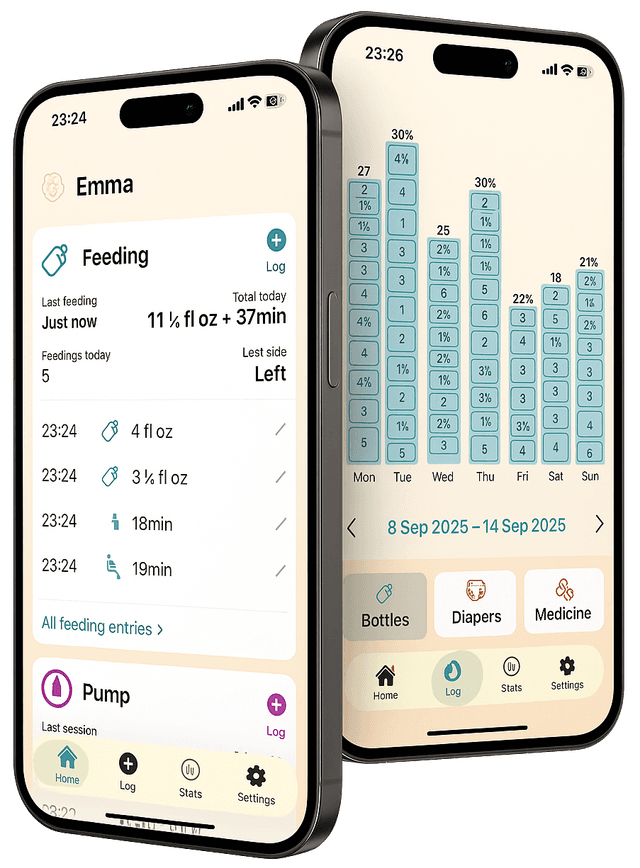
- •Using a feeding tracking app that logs feeds and patterns in one place
When tracking feeding, it's often more helpful to focus on meaningful patterns rather than exact timestamps. This can make tracking feel more intuitive and less like a strict checklist.
Parents who combine breastfeeding and bottle feeding often find it helpful to track both in the same place.
Choosing a Feeding Tracking App
When using an app to track feeding, simplicity and ease of use are especially important. Parents are often juggling many tasks, and tracking should not add to that burden.
When choosing a feeding tracking app, parents often look for tools that:
- •Are quick and intuitive to use
- •Can be shared with other caregivers
- •Offer dark mode for nighttime feeds
- •Avoid ads and unnecessary distractions
- •Present information in a clear, easy-to-understand way
Apps like Noora Baby are designed with these needs in mind, bringing feeding, diaper, and medicine tracking together in one simple place so parents can stay informed without added complexity.
A Practical Note for Parents
Feeding tracking can be especially helpful during moments when questions come up, such as wondering whether your baby is feeding often enough, noticing changes in feeding behavior, or preparing for a pediatrician visit. Having a simple record to refer back to can reduce guesswork and make these moments feel more manageable.
Used thoughtfully, feeding tracking supports your understanding of your baby's unique patterns while still leaving room to respond to cues and instincts. For many parents, it becomes a quiet source of reassurance during a demanding stage of early life.
Explore all baby feeding resources

How to Tell If Your Baby Is Getting Enough Milk
Learn how to tell if your baby is getting enough milk, including key signs to watch, differences between breastfeeding and bottle feeding, and when to speak with a healthcare provider.
Read more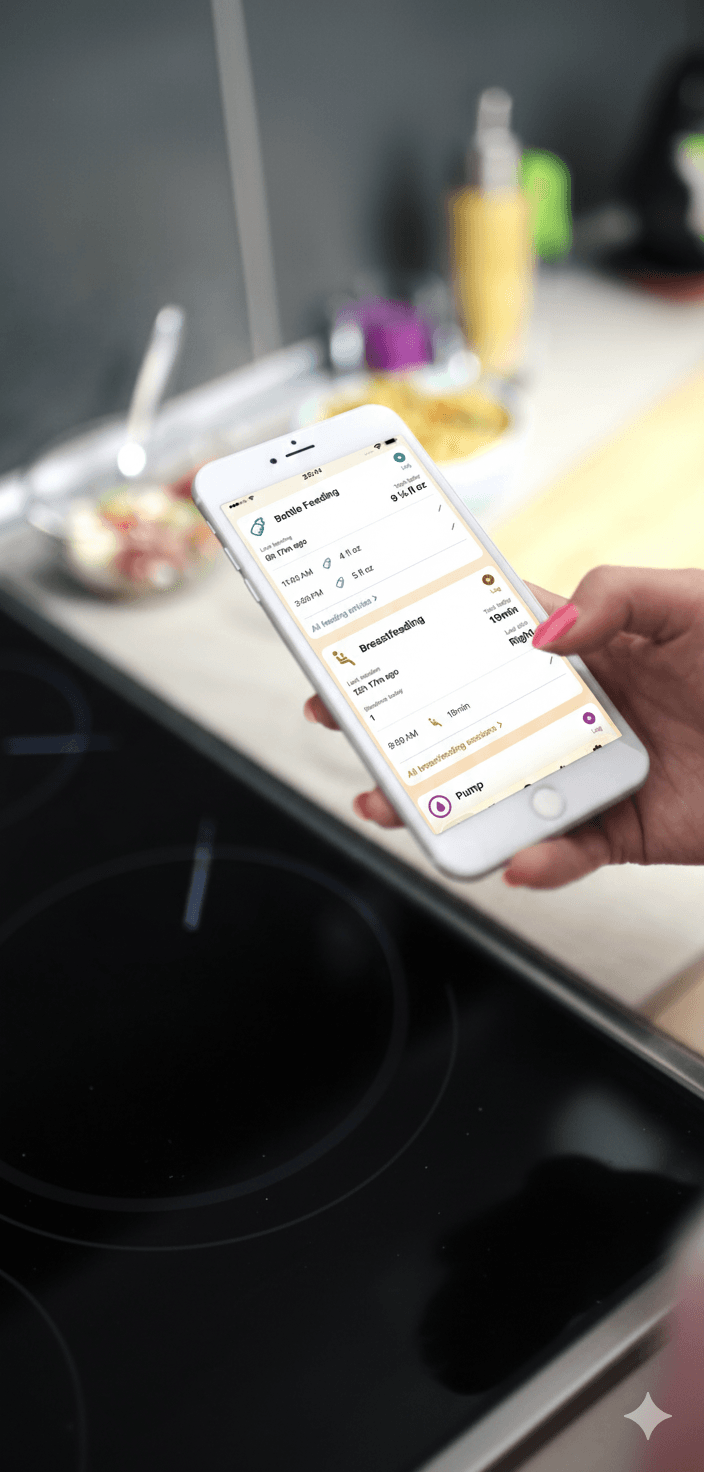
How Accurate Does Baby Feeding Tracking Need to Be?
Learn how accurate baby feeding tracking really needs to be, what details matter most, and how focusing on patterns can help you track with confidence.
Read more
Newborn Breastfeeding Tracker: Why and How to Track Feeds
Learn the best practices for tracking breastfeeding sessions, including timing, sides, and duration for better feeding insights and pattern recognition.
Read more
Understanding Your Newborn's Feeding Schedule
Newborns eat frequently and unpredictably. Here's what to expect, how to recognize patterns, and when feeding schedules typically emerge.
Read more
Bottle vs Breastfeeding: What It Means for Growth
Compare feeding methods and their impact on your baby's growth and development. Learn the tracking differences and what to monitor for each.
Read more
The Complete Guide to Cluster Feeding
Cluster feeding is normal but exhausting. Here's how to cope, what to track during these intense periods, and when they typically occur.
Read more
Common Feeding Challenges and Solutions
From latch issues to low milk supply, find practical solutions to common feeding challenges. Learn how tracking helps identify and solve problems.
Read more
Comfort Feeding vs Hunger: How to Tell the Difference
Learn how to tell the difference between comfort feeding and hunger in babies, what feeding cues mean, and how tracking patterns can help you respond with confidence.
Read moreStart Tracking Feeding with Noora Baby
Track breastfeeding sessions, bottle amounts, and pumping—all in one simple app. See patterns emerge and ensure your baby is getting enough milk.