
How Do I Know If My Baby Is Getting Enough Milk?
One of the most common worries parents have in the early weeks is whether their baby is getting enough milk. Feeding can feel constant, unpredictable, and sometimes confusing, especially when babies want to eat often or behave differently from one day to the next.
Because babies cannot tell us directly, parents are left interpreting signs like feeding behavior, diapers, and weight changes. What often helps most is understanding how these signs fit together over time. This article explains how healthcare providers typically assess milk intake, which signs matter most, and how to interpret common behaviors in both breastfed and formula-fed babies.

Photo by Sydney Troxell from Pexels
Why a Single Sign Can Be Misleading
Many parents look for one clear indicator that feeding is going well. Some focus on wet diapers, while others worry about how often their baby eats or how long feeds last. In reality, no single sign gives the full picture.
For example, a baby may have fewer wet diapers on a day when they sleep longer, or feed more often during a growth spurt without actually needing more milk overall. These short-term changes can look concerning in isolation, but they are often part of normal variation. Healthcare providers look at patterns across several days rather than reacting to one feed or one diaper.
Key Indicators of Adequate Milk Intake
1. Diaper Output Over Time
Diaper output is one of the most practical and reassuring signs in the early weeks. As milk intake increases after birth, wet diapers become more frequent.
A commonly used guideline shows this progression:
- Day 1: about 1 wet diaper
- Day 2: about 2 wet diapers
- Day 3: about 3 wet diapers
- By day 5 or 6: around 6 or more wet diapers in 24 hours
Once feeding is established, steady wet diaper counts with pale yellow or clear urine are generally reassuring. Pediatric guidance consistently uses diaper output as part of feeding assessment in young babies (Source: Nationwide Children's Hospital).
Tracking diapers across several days often provides more clarity than focusing on a single low-output day. This approach is explained further in How to Track Newborn Diaper Changes.
2. Feeding Behavior and Patterns
Newborn feeding behavior can feel intense even when intake is adequate. Many babies feed frequently, especially in the first weeks. Public health guidance notes that newborns often feed 8 to 12 times or more in a 24 hour period during this stage (Source: CDC).
Signs of effective feeding may include rhythmic sucking, swallowing at times, and a baby who appears calmer after feeding. That said, feeding styles vary. Some babies feed quickly, while others take longer or pause often. Frequent feeding alone does not mean something is wrong.
Looking at feeding behavior alongside diaper output and growth usually provides more useful context than any one sign alone.
3. Weight Gain Over Time
Weight gain is one of the most objective indicators of intake, but it is rarely interpreted on its own. It is normal for babies to lose some weight after birth, often up to 5 to 7 percent, and most regain their birth weight by around 10 to 14 days.
After this period, steady weight gain is expected, though the rate varies between babies. In the early months, many babies gain around 150 to 200 grams per week. Healthcare providers focus on trends across multiple weigh-ins rather than reacting to a single measurement.
4. Alertness, Activity, and Behavior
A baby who is getting enough milk is usually alert during waking periods and shows interest in feeding. Many parents expect constant calm, but occasional fussiness is normal even in well-fed babies.
More concerning signs include persistent lethargy, difficulty staying awake to feed, or a noticeable change in responsiveness. When these behaviors occur alongside reduced diaper output or feeding difficulties, they deserve closer attention.
Breastfed vs Formula-Fed Babies
Feeding method can influence how these signs appear, but the underlying indicators are the same.
Breastfed Babies
Breastfed babies often feed more frequently because breast milk digests quickly. This can lead to shorter intervals between feeds and frequent diaper output, especially in the early weeks. Feeding may increase noticeably during growth spurts, particularly in the evening.
For more context on these patterns, see Recognizing Cluster Feeding and Growth Spurts.
Formula-Fed Babies
Formula-fed babies may feed at more predictable intervals and sometimes have slightly fewer bowel movements. Adequate intake is still reflected by regular wet diapers, steady growth, and a baby who appears comfortable after feeds.
When to Be Concerned
Parents should consider contacting a healthcare provider if they notice:
- Consistently fewer than six wet diapers per day after feeding is established
- Very dark urine or strong urine odor
- Poor weight gain or failure to regain birth weight by about two weeks
- Persistent lethargy or unusual fussiness
- Refusal to feed across multiple sessions
Reduced urine output combined with changes in behavior can be a sign of dehydration and should be evaluated.
Why Patterns Matter More Than Single Signs
It can be stressful to focus on individual feeds or diapers, especially when day-to-day variation is normal. Healthcare providers rarely make decisions based on a single data point.
For example, one low-output day may reflect longer sleep or a mild illness, while a consistent decline across several days is more concerning. Tracking feeding and diaper changes helps parents step back from individual moments and see trends that are more meaningful over time.
Takeaway
Knowing whether your baby is getting enough milk involves looking at several signs together. Regular wet diapers, frequent feeding, steady growth, and normal alertness all contribute to the overall picture.
No single sign provides a definitive answer on its own. If you notice persistent changes or feel unsure, a healthcare provider can help assess intake and offer guidance.
The information in this article is based on established pediatric guidance and reputable health sources and is provided for general education. It should not replace advice from a qualified healthcare professional.
Frequently Asked Questions
How soon should I see signs that my baby is getting enough milk?
How soon should I see signs that my baby is getting enough milk?
Most babies show increasing wet diapers within the first week and begin steady weight gain by the second week.
My baby feeds often but still seems hungry. Should I worry?
My baby feeds often but still seems hungry. Should I worry?
Frequent feeding can be normal, especially during growth spurts. Diaper output and growth patterns are usually more informative than feeding frequency alone.
Can diaper color tell me if my baby is getting enough milk?
Can diaper color tell me if my baby is getting enough milk?
Color alone is less helpful than wet diaper counts and growth. For color-related concerns, see Baby Poop Colors Explained: What's Normal and When to Worry.
Does poor weight gain always mean low milk intake?
Does poor weight gain always mean low milk intake?
Not always. Weight gain should be interpreted alongside diaper output, feeding behavior, and overall health.
Can tracking help reduce uncertainty?
Can tracking help reduce uncertainty?
Yes. Tracking feeds and diapers over several days helps reveal patterns that are more meaningful than individual feeds.
Track Feeding Patterns with Noora Baby
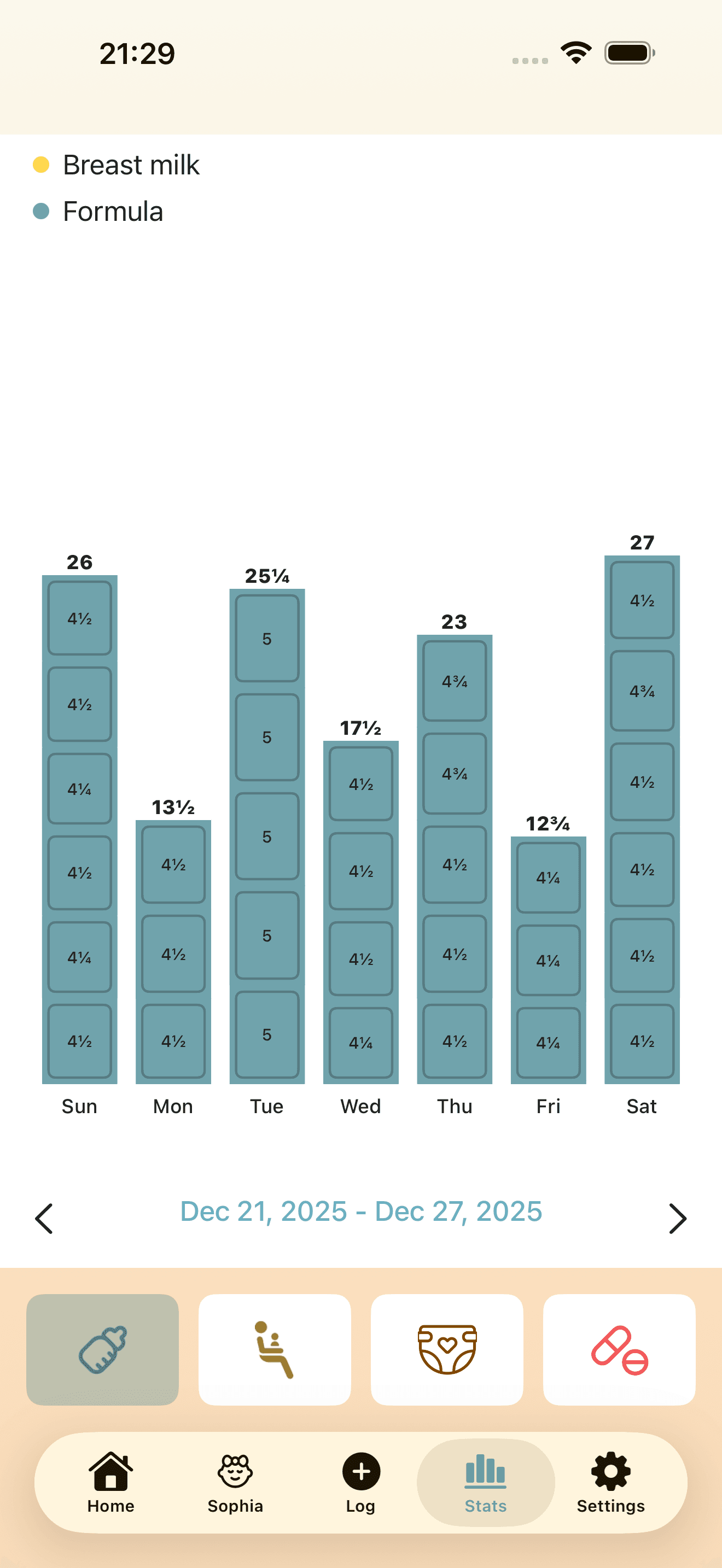
See your baby's feeding pattern emerge naturally with automatic tracking and pattern detection. No need to analyze the data yourself—Noora Baby shows you when baby typically gets hungry.
- One-tap start and stop for each session
- Side-tracking for breastfeeding (left/right)
- Ability to share logs with partners or caregivers

Related Guides
Newborn Feeding Schedule
How often should your baby eat by age
Track Breastfeeding
Best practices for breastfeeding tracking
Track Diaper Changes
Monitor wet diapers to ensure adequate feeding
Bottle vs Breastfeeding Growth
Growth tracking differences by feeding method
Feeding Tracking Accuracy
How precise does tracking really need to be
Comfort Feeding vs Hunger
Tell the difference between hunger and comfort feeding
Cluster Feeding Guide
When baby wants to feed constantly
All Feeding Guides
Back to feeding tracking hub
Start Tracking with Noora Baby
Monitor your baby's feeding patterns and have peace of mind knowing they're getting enough milk.