
How Often Should My Newborn Eat? A Feeding Schedule by Age
One of the first questions most new parents ask is how often their newborn should eat. In the early weeks, feeding can feel almost constant and unpredictable, which makes it difficult to know what is normal and what might need attention.
While feeding frequency varies based on age, size, alertness, and feeding method, there are patterns that pediatricians and lactation specialists commonly use when assessing newborn health. Understanding these patterns can help parents feel more confident, especially during a time when days and nights tend to blur together.
This guide explains typical feeding frequency by age, how hunger cues fit into feeding decisions, what differences to expect between breastfeeding and formula feeding, and why looking at patterns over time often matters more than watching the clock.

Photo by Sarah Chai from Pexels
Why Feeding Frequency Matters
How often a newborn eats offers useful insight into how well they are adjusting in the early weeks. Feeding frequency helps caregivers and healthcare providers understand whether a baby is getting enough milk, responding to growth spurts, and maintaining healthy energy and hydration levels.
Knowing what is typical can help parents:
- Recognize normal newborn behavior
- Feel more at ease during frequent feeding phases
- Understand temporary increases tied to growth spurts
- Share clearer information with pediatricians or lactation consultants
Healthy newborns show a wide range of feeding behaviors. Rather than aiming for a perfect schedule, most guidance focuses on patterns that support steady growth and normal diaper output. Feeding frequency is best considered in the context of other signs like weight gain and urine/stool output, rather than on its own. Many pediatric experts emphasize looking at the whole picture, including diapers and growth trends, to understand how well a baby is feeding, especially in the first weeks of life (Source: HealthyChildren.org).
How Often Should a Newborn Eat?
Newborns feed often because their stomachs are small and milk is digested quickly. In the first month, both breastfed and formula-fed babies typically feed many times a day, even if the timing does not feel consistent.
Instead of watching the clock, it is often more helpful to look at how many feeds occur over a full 24-hour period.
Typical Feeding Frequency by Age
| Baby Age | Typical Feeds per Day | Approximate Time Between Feeds |
|---|---|---|
| 0–2 weeks | 10–12 feeds | Every 1–3 hours |
| 2–4 weeks | 8–10 feeds | Every 2–3 hours |
| 1–2 months | 7–9 feeds | Every 2.5–3.5 hours |
| 2–3 months | 6–8 feeds | Every 3–4 hours |
These numbers are averages, not strict rules. Some babies naturally feed more often, especially during growth spurts, while others gradually stretch time between feeds earlier. Day-to-day variation is normal.
Public health guidance supports feeding on demand rather than on a strict schedule, particularly during the first months of life (Source: CDC).
Understanding Hunger Cues
Newborns communicate hunger long before they cry. Learning to recognize early hunger cues can make feeding calmer and reduce frustration for both baby and caregiver.
Early signs often include subtle movements such as stirring, opening the mouth, turning the head side to side, or bringing hands toward the mouth. Responding at this stage usually leads to smoother feeds.
As hunger builds, babies may become more active, stretch their bodies, or attempt to latch onto anything near their mouth. Crying tends to appear last and can make feeding more difficult because babies are already upset.
Health organizations recommend cue-based feeding because it supports responsive caregiving and allows babies to regulate intake naturally (Source: World Health Organization).
What a 24-Hour Feeding Pattern Might Look Like
Many parents expect feeds to be evenly spaced throughout the day, but newborn feeding patterns rarely follow such a tidy rhythm. Instead, feeds often cluster during certain times.
A common pattern includes more frequent feeds in the morning, slightly longer gaps in the afternoon, and cluster feeding in the evening. As babies grow, nighttime stretches of sleep may gradually lengthen.
Not every baby follows this pattern, and that is completely normal. What matters is that total intake across the day remains appropriate and diaper output stays consistent.
If evening cluster feeding feels intense, you may find additional reassurance in Recognizing Cluster Feeding and Growth Spurts.
Breastfeeding vs. Formula Feeding Frequency
Both breastfeeding and formula feeding support healthy growth, but digestion differences can influence feeding rhythm.
Breastfed Babies
Breastfed babies often feed more frequently, especially in the early weeks. Breast milk digests quickly, sometimes in as little as 1.5 to 2 hours, which naturally leads to shorter intervals between feeds. Feeding sessions may be brief or longer and relaxed, depending on the baby.
Formula-Fed Babies
Formula-fed babies may go slightly longer between feeds because formula takes longer to digest, often closer to 2.5 to 3 hours. Feeding intervals may feel more predictable earlier, though hunger cues should still guide feeding decisions.
Both patterns are considered normal. Adequate intake is better assessed through diaper output and weight gain than through timing alone, as discussed in Bottle vs. Breastfeeding Growth.
When Feeding Frequency Changes
Feeding frequency is not fixed and often increases during periods of rapid growth. Many babies experience noticeable changes around the first week, again at two to three weeks, and once more around four to six weeks.
During these phases, babies may feed more often, sleep differently, and seem fussier than usual. These shifts are usually temporary and reflect increased nutritional needs as the body grows.
How Tracking Helps Parents Understand Feeding Frequency
In the early weeks, it can be surprisingly difficult to remember when and how often a baby is fed. Tracking feeding sessions, even loosely, can bring clarity without requiring perfection.
Tracking can help parents notice:
- Overall feeding frequency
- Day versus night patterns
- Periods of cluster feeding
- Gradual spacing of feeds over time
- Changes that persist across several days
Even short-term tracking can make patterns easier to see and conversations with healthcare providers more productive. This approach is explored further in How Accurate Does Baby Feeding Tracking Need to Be?
Takeaway
Newborn feeding rarely follows a strict schedule. Frequent feeds, variable timing, and periods of cluster feeding are all part of normal early development.
Rather than focusing on exact intervals, it is more helpful to watch overall patterns, hunger cues, diaper output, and weight gain. Together, these indicators provide a clearer picture of whether feeding is meeting your baby's needs.
If questions or concerns come up, a healthcare provider can help interpret these signs and offer reassurance or guidance.
The information in this article is based on established pediatric guidance and reputable health sources and is provided for general education. It should not replace advice from a qualified healthcare professional.
Frequently Asked Questions
Is it normal for my newborn to eat every hour?
Is it normal for my newborn to eat every hour?
Yes. Especially in the first weeks, feeding every hour can be normal and often reflects growth spurts or cluster feeding.
Should I wake my newborn to feed?
Should I wake my newborn to feed?
In the early days, many providers recommend waking babies to feed if they sleep longer than about three hours, particularly until birth weight is regained.
Do formula-fed babies always eat less often?
Do formula-fed babies always eat less often?
Not always. While some formula-fed babies space feeds sooner, many still feed frequently in the first month.
When do feeding intervals usually start to lengthen?
When do feeding intervals usually start to lengthen?
For many babies, feeds begin to space out after the first month, though timing varies widely.
Can tracking feeding make me more anxious?
Can tracking feeding make me more anxious?
Tracking should feel supportive. If it increases stress, simplifying or stopping tracking can be helpful once patterns feel familiar.
Track Feeding Patterns with Noora Baby
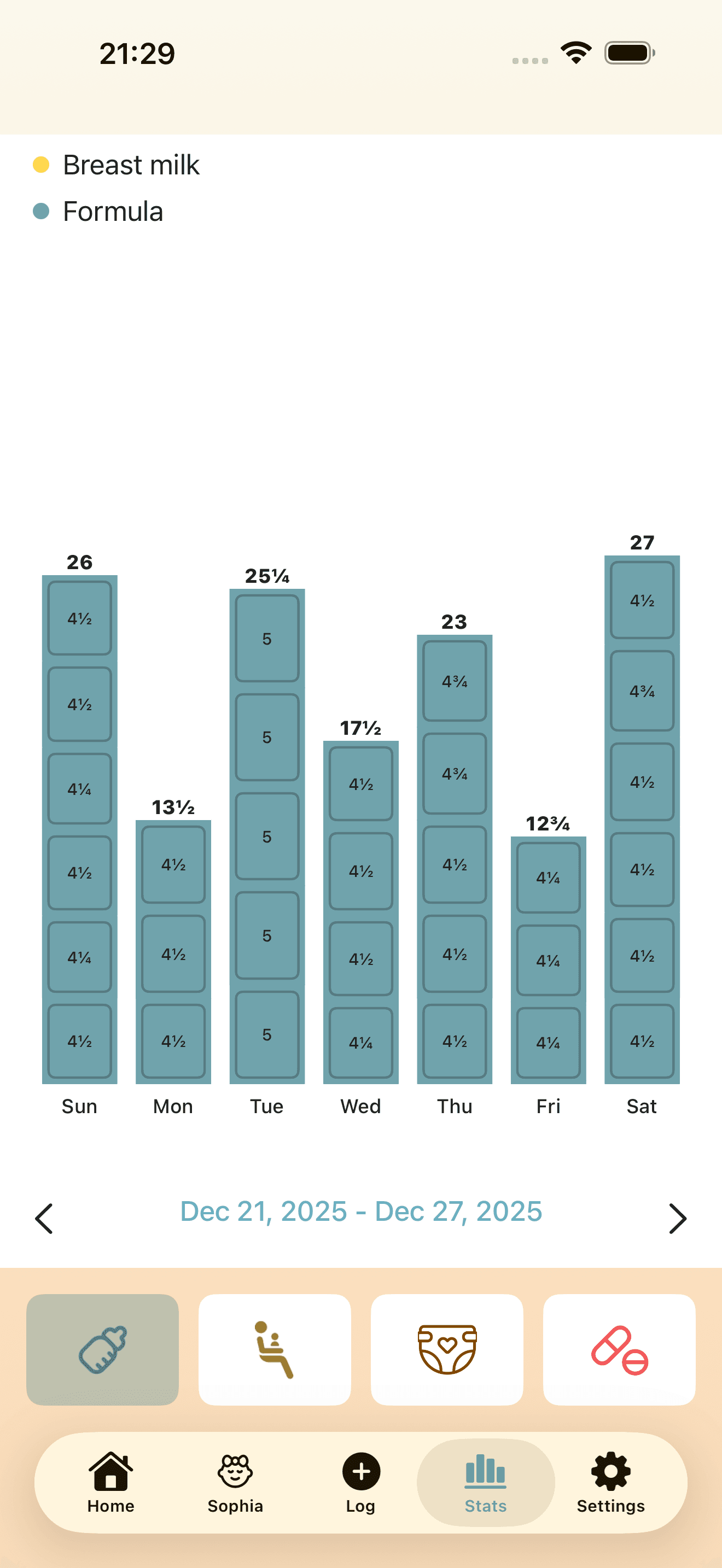
See your baby's feeding pattern emerge naturally with automatic tracking and pattern detection. No need to analyze the data yourself—Noora Baby shows you when baby typically gets hungry.
- One-tap start and stop for each session
- Side-tracking for breastfeeding (left/right)
- Ability to share logs with partners or caregivers

Related Guides
Is Baby Getting Enough Milk?
Signs of adequate milk intake and what to watch
Track Breastfeeding
Best practices for breastfeeding tracking
Cluster Feeding Guide
When baby wants to feed constantly
All Feeding Guides
Back to feeding tracking hub
Bottle vs Breastfeeding Growth
Growth tracking differences by feeding method
Feeding Tracking Accuracy
How precise does tracking really need to be
Comfort Feeding vs Hunger
Tell the difference between hunger and comfort feeding
Track Diaper Changes
Monitor wet diapers to ensure adequate feeding
Start Tracking with Noora Baby
Understand your baby's unique feeding pattern with simple tracking and automatic insights.