
Recognizing Cluster Feeding and Growth Spurts
Many parents are surprised when their newborn suddenly wants to feed much more often than usual, especially later in the day. This pattern, known as cluster feeding, is common and closely linked to normal periods of rapid growth. While cluster feeding can be exhausting, it is usually a normal part of infant development.
This guide explains how to recognize cluster feeding, how it relates to growth spurts, and how tracking feeding and diaper patterns can help you understand what is normal and when to seek professional guidance.

Photo by MART PRODUCTION from Pexels
What Is Cluster Feeding?
Cluster feeding refers to a pattern where a baby feeds multiple times in quick succession, often with short and unpredictable intervals between feeds. These feeds may happen every 20 to 60 minutes over several hours and are most commonly seen in the late afternoon or evening.
This behavior is especially common in the first weeks of life and during periods of increased growth. According to public health guidance, newborns typically feed 8 to 12 times or more in a 24 hour period, and feeding frequency may increase temporarily during growth spurts (Sources: CDC, Pregnancybirthbaby.org).
Example of a Cluster Feeding Day
The chart below shows an example of a 24-hour feeding pattern with more frequent feeds during late afternoon and evening hours. This is one of the most typical cluster feeding scenarios.
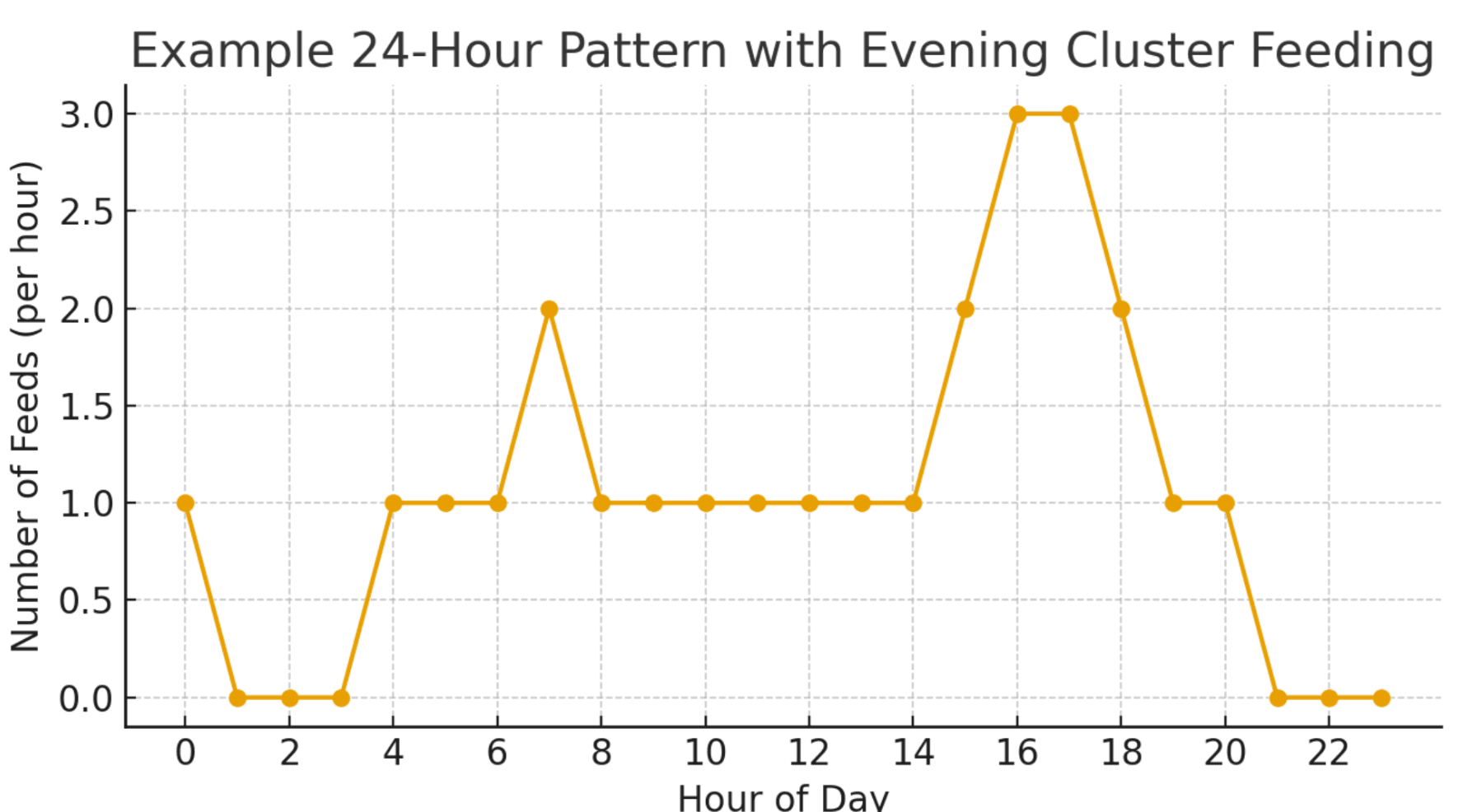
Many parents notice a rhythm where feeds are more spread out earlier in the day, followed by several closer-together feeds in the evening and then a longer stretch of sleep. This pattern is common, but it is not universal. Babies vary widely, and your child may follow a different routine that is still completely normal.
What Are Growth Spurts?
Growth spurts are short periods when babies grow quickly and often seem hungrier than usual. During these phases, it is common for babies to feed more frequently and for their sleep to feel more disrupted for a few days. Parents often notice more feeding cues soon after a feed, more fussiness, and feeding that feels harder to predict. The NHS notes that babies may cluster feed for a few days when they are going through a growth spurt, and that this is very normal.
When Do Growth Spurts Happen?
Growth spurts often follow patterns that many parents notice as their baby's development progresses. While every child is different, many infants go through several phases of rapid growth in the first year. These growth spurts may happen around 2 to 3 weeks, 6 weeks, 3 months, and 6 months of age. During these times, your baby may seem hungrier, feed more frequently, or show temporary changes in sleep and behavior. These periods usually only last a few days, and once they pass, feeding and sleep patterns often return to what is typical for your child (Source: Cleveland Clinic / Growth Spurt).
The chart below illustrates common growth spurt intensity peaks during the first four months of life.
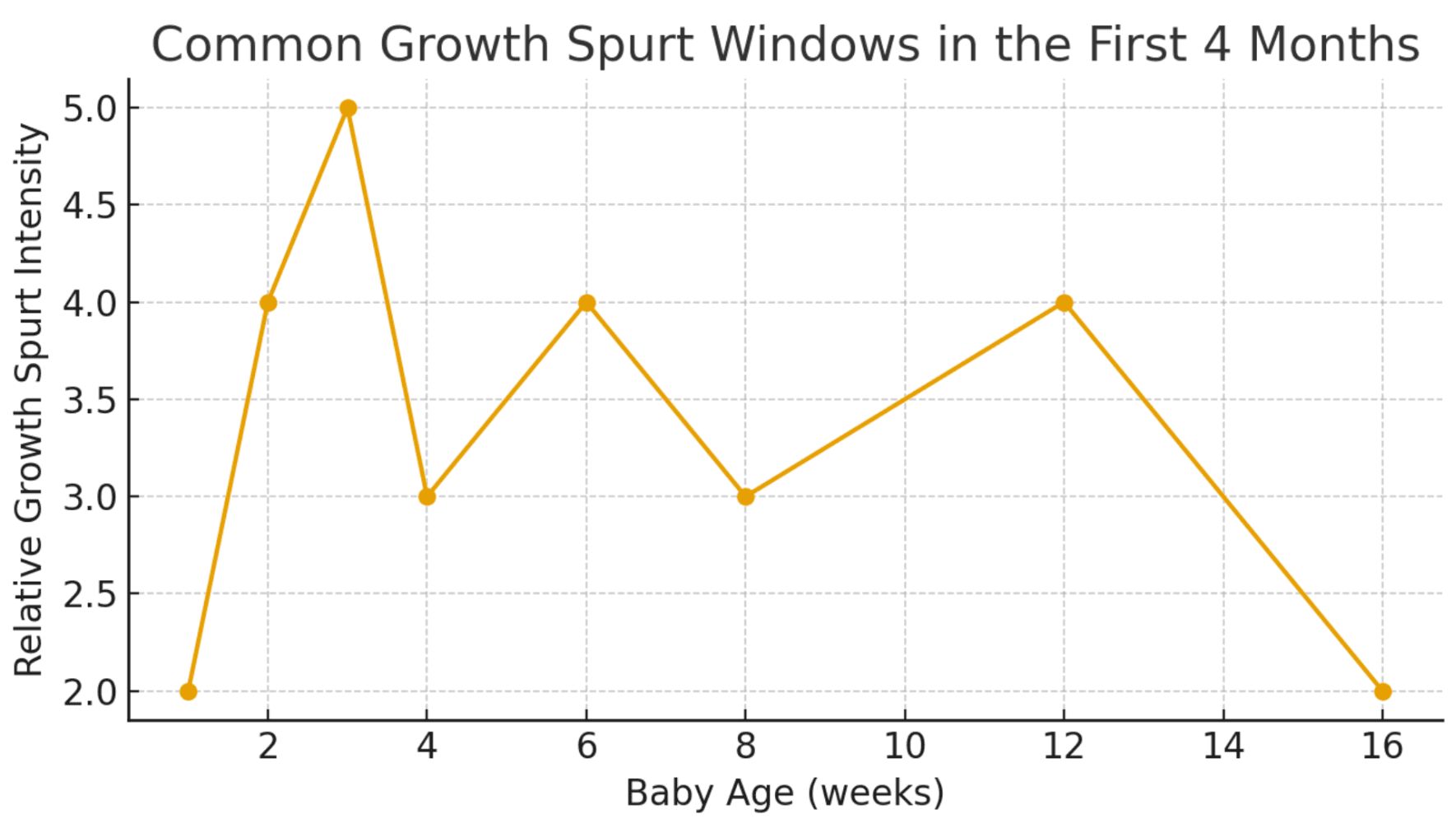
The peaks do not represent exact measurements but help visualize the timing of growth spurts many families observe.
How Cluster Feeding Supports Milk Supply
For breastfeeding parents, cluster feeding plays an important biological role. Breast milk is produced on a supply and demand basis, so the more your baby feeds, the more signals the body receives to maintain and increase milk production. Frequent feeding, like what happens during cluster feeding, tells the body that more milk is needed, helping milk production adjust during times of increased demand. This is especially helpful in the first weeks of life when milk supply is still becoming established (Source: Establishing and increasing your milk supply).
How Feeding Logs Help You Interpret Cluster Feeding
Without context, cluster feeding can easily be mistaken for hunger problems or supply concerns. Feeding logs help by allowing parents to:
- See when cluster feeding happens within a full day
- Compare total daily feeds rather than individual sessions
- Identify short term increases linked to growth spurts
- Distinguish temporary patterns from ongoing concerns
Looking at feeding behavior over several days often reveals that total intake remains adequate even when feeds feel frequent and unpredictable.
Guidance on pattern based tracking is outlined in How to Track Newborn Diaper Changes.
When Cluster Feeding May Signal a Problem
Cluster feeding is usually normal, but parents should consider seeking guidance if frequent feeding is paired with:
- Poor or stalled weight gain
- Fewer than six wet diapers per day once feeding is established
- Very short or ineffective feeds
- Minimal swallowing during feeds
- Persistent vomiting or large amounts of spit up
- Ongoing lethargy or difficulty staying awake to feed
Reduced urine output combined with feeding difficulties can be a sign of dehydration and should be evaluated (Sources: Dehydration: Giving Liquids at Home, NHS / Dehydration).
If concerns about frequent feeding are paired with worries about intake, reviewing how healthcare providers assess milk adequacy can be helpful. This is explained in How Do I Know If My Baby Is Getting Enough Milk?
Practical Strategies for Managing Cluster Feeding
Cluster feeding can be physically and emotionally demanding, especially when it happens in the evening or lasts several days. Preparing for these periods and adjusting expectations can make them easier to manage.
Helpful strategies include:
- Feeding on cue rather than by the clock, since cluster feeding is driven by your baby's needs rather than a schedule
- Creating a comfortable feeding setup with good back support, pillows, and easy access to water and snacks
- Planning lower demands during common cluster feeding times, such as the late afternoon or evening
- Accepting help with household tasks or childcare for older siblings so you can focus on feeding and rest
- Taking short breaks when possible and reminding yourself that cluster feeding is a temporary phase linked to growth
Adequate rest, hydration, and emotional support play an important role in helping caregivers get through cluster feeding periods with more confidence and less stress.
The information in this article is based on established pediatric guidance and reputable health sources and is provided for general education. It should not replace advice from a qualified healthcare professional.
Frequently Asked Questions
Is cluster feeding normal in newborns?
Is cluster feeding normal in newborns?
Yes. Cluster feeding is common in newborns and often occurs during growth spurts or periods of developmental change.
How long does cluster feeding usually last?
How long does cluster feeding usually last?
Cluster feeding typically lasts a few hours at a time or several days during a growth spurt.
Does cluster feeding mean my baby is not getting enough milk?
Does cluster feeding mean my baby is not getting enough milk?
Not usually. Cluster feeding alone is not a sign of low intake if diaper output and weight gain are appropriate.
Can formula fed babies cluster feed?
Can formula fed babies cluster feed?
Yes. Formula fed babies can also feed more frequently during growth spurts.
How can tracking help during cluster feeding?
How can tracking help during cluster feeding?
Tracking feeds and diapers over several days helps confirm whether frequent feeding fits into a healthy overall pattern.
How Noora Baby Helps Track Cluster Feeding and Growth Spurts
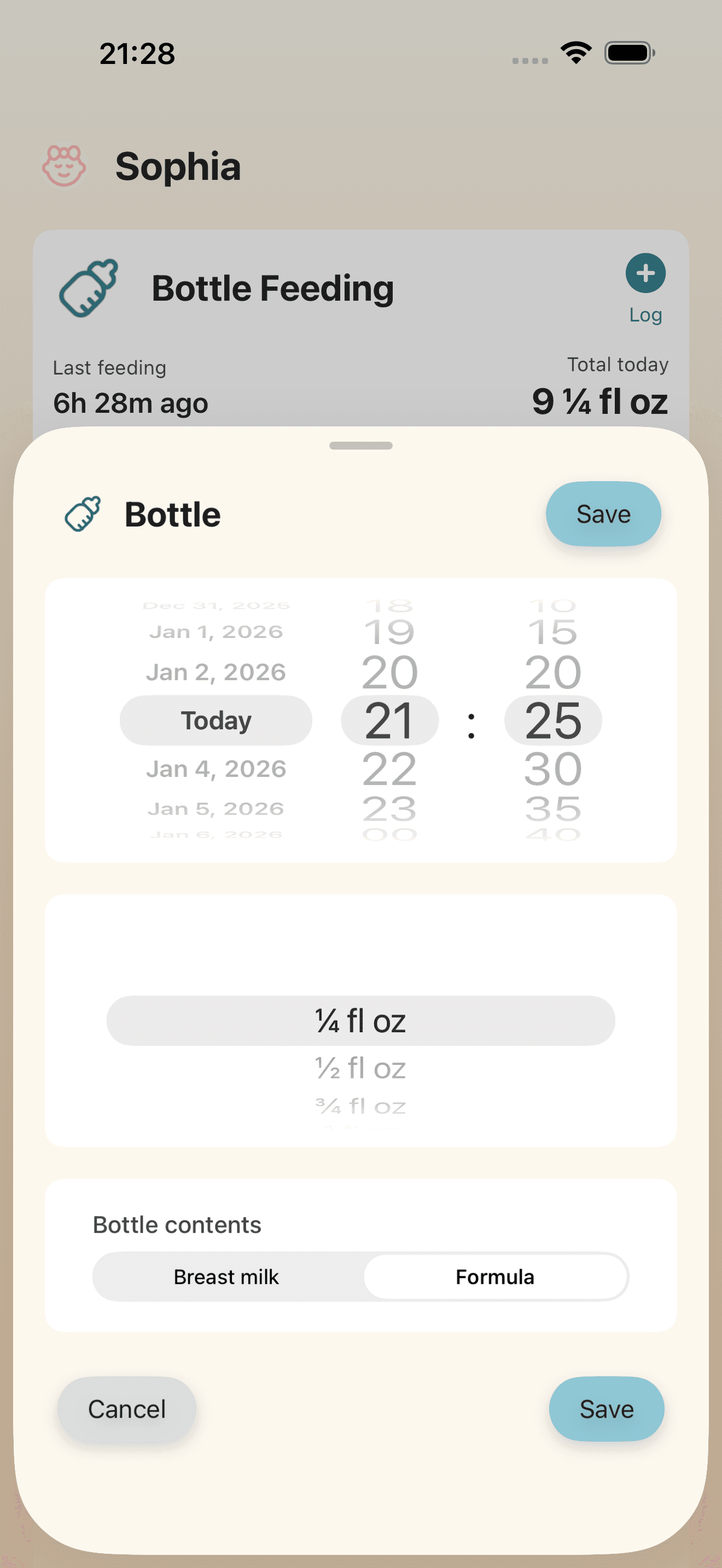
Tracking feeds and diaper changes can provide reassurance during cluster feeding. Seeing patterns across several days helps confirm whether increased feeding is part of a normal developmental phase.
Apps like Noora Baby help parents:
- •Identify periods of increased feeding
- •Track diaper output alongside feeds
- •Share accurate information with caregivers or healthcare professionals
- •Focus on trends rather than isolated feeds

Related Guides
Is Baby Getting Enough Milk?
Signs of adequate milk intake and what to watch
Newborn Schedule
Normal feeding frequencies
Feeding Challenges
Common issues and solutions
All Feeding Guides
Back to feeding hub
Feeding Tracking Accuracy
How precise does tracking really need to be
Comfort Feeding vs Hunger
Tell the difference between hunger and comfort feeding
Bottle vs Breastfeeding Growth
How feeding methods affect growth tracking
Start Tracking with Noora Baby
Simple tracking even during exhausting cluster feeding periods. One-tap logging keeps you sane.
Ultra-fast logging